
Enter your email address to receive a one-time password.
Enter the one-time password sent to your email address.








10,000+ games across all genres
50,000+ movies, shows & live TV
500+ workout classes & training programs
1,000+ recipes & chef masterclasses
Curated trends, travel & style guides
Tutorials, routines & product reviews
Creative workshops & visual inspiration
Documentaries & virtual heritage tours
Cutting-edge discoveries & tech deep dives
Courses, lectures & skill certifications
500+
Titles
100+
Games
500+
Fitness Programs
180+
Countries
2M+
Members
4.9★
Rating
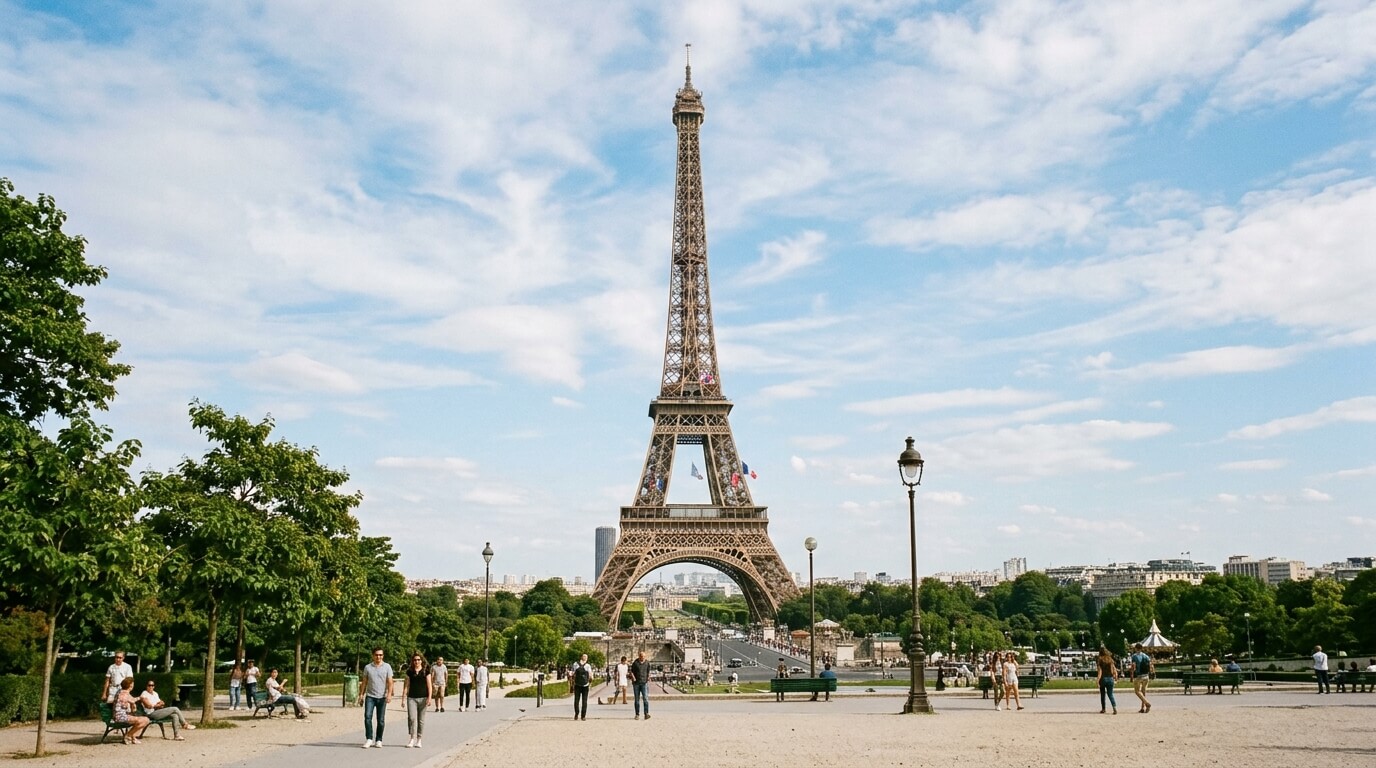
The Eiffel Tower is widely regarded as one of the world's most recognizable landmarks. Standing proudly in the heart of Paris, the tower has become a global symbol of romance, culture, and architectural innovation. Yet when it was first introduced, many people considered it a strange and unattractive structure. The Eiffel Tower was designed by engineer Gustave Eiffel for the 1889 World’s Fair, which celebrated the 100th anniversary of the French Revolution. Construction started in 1887 and was completed in just over two years. At the time, building a 300-meter iron tower was considered an incredible engineering achievement. Surprisingly, the tower faced strong criticism from famous artists and writers in Paris. Many believed it would ruin the beauty of the city’s historic skyline. Despite the protests, the structure quickly attracted attention from visitors around the world and soon became one of France’s most beloved monuments. Originally, the Eiffel Tower was meant to stand for only 20 years. However, its value as a radio transmission tower helped save it from demolition. During the 20th century, it played an important role in communication and later became one of the most visited tourist attractions on Earth. Today, millions of people visit the Eiffel Tower every year to admire its breathtaking views and unique design. Illuminated at night with thousands of sparkling lights, it remains a timeless icon of Paris and one of the greatest achievements in modern engineering.
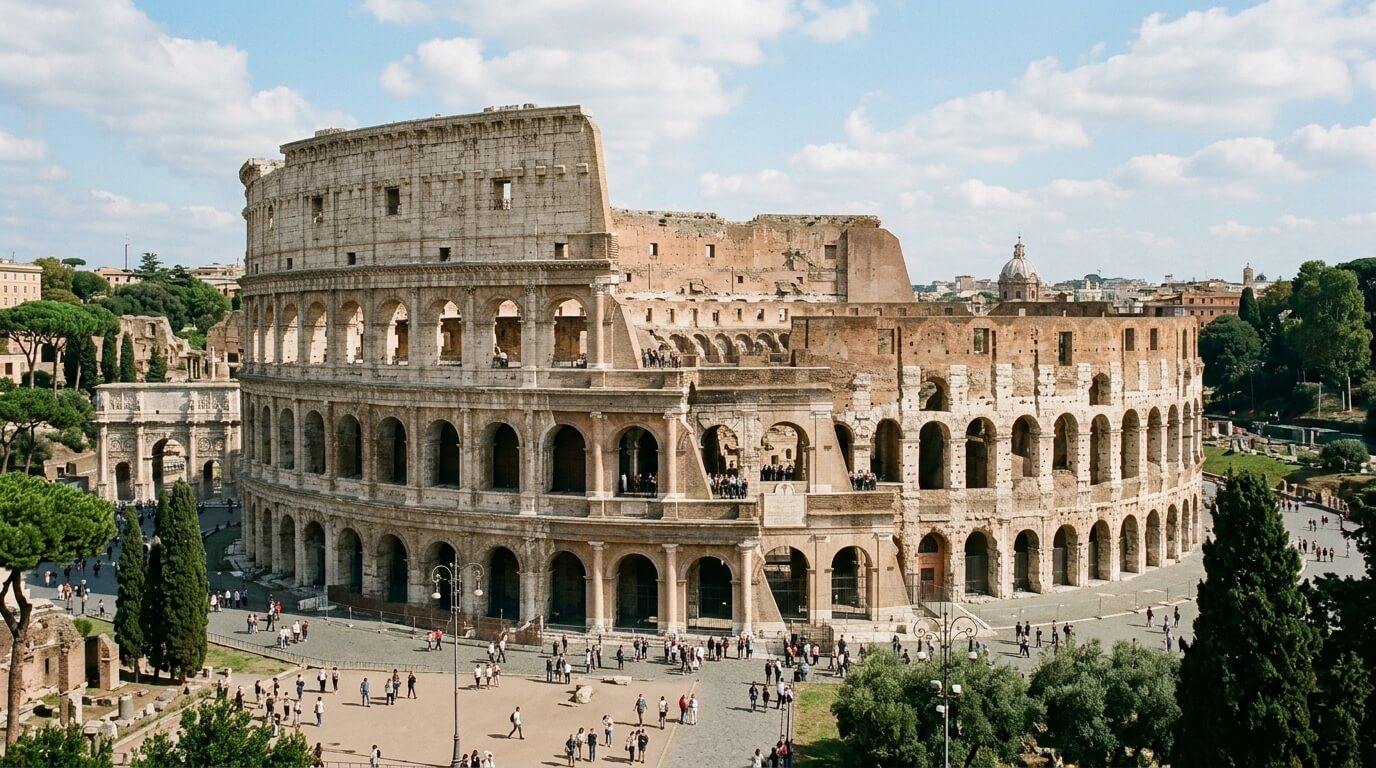
The Colosseum is one of the most iconic structures ever built, and even after nearly 2,000 years, it continues to fascinate visitors from all over the world. Located in the heart of Rome, it stands as a powerful reminder of the scale and ambition of the ancient world. Built during the time of the Roman Empire, the Colosseum was completed in 80 AD under Emperor Titus. It was designed as a massive amphitheater that could hold up to 50,000 spectators, who gathered to watch gladiator battles, animal hunts, and public spectacles. What makes the Colosseum truly remarkable is its engineering. Despite being constructed almost entirely without modern technology, it featured a complex system of vaults, corridors, and trapdoors that allowed for smooth crowd movement and dramatic performances. Even today, architects study its design for inspiration. Over the centuries, earthquakes, fires, and stone removal have damaged parts of the structure, yet its main skeleton still stands strong. This resilience adds to its mysterious beauty, showing how durable Roman construction truly was. Today, the Colosseum is one of the most visited landmarks in the world and a symbol of ancient Roman culture. It continues to amaze not only because of its size, but because it connects us directly to a civilization that shaped much of modern Europe.
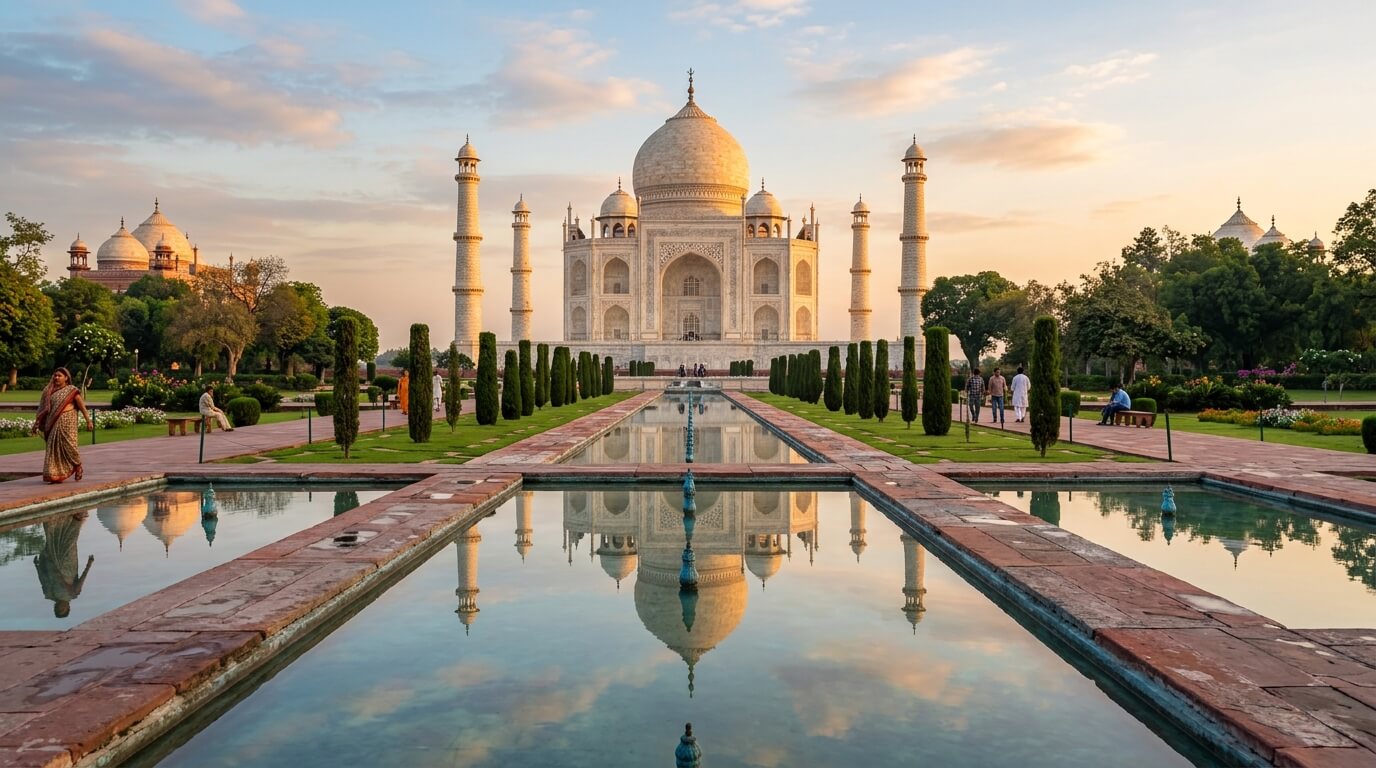
The Taj Mahal is often described as one of the most beautiful buildings in the world, but its true magic goes far beyond its white marble exterior. Resting beside the Yamuna River, it is celebrated for its design, emotional depth, and perfect symmetry. The monument was commissioned by the Mughal emperor Shah Jahan in memory of his beloved wife Mumtaz Mahal, who died in 1631. Their love story became the inspiration for one of the most extraordinary architectural achievements in history. Built during the height of the Mughal Empire, the Taj Mahal combines Persian, Islamic, and Indian architectural styles. Its perfect symmetry, delicate carvings, and detailed marble inlay work create a sense of harmony that feels almost unreal. Inside the main structure, visitors find a quiet, dimly lit space where the cenotaphs of Shah Jahan and Mumtaz Mahal rest. Although the real tombs are located in a lower chamber, the atmosphere above still carries a deep sense of peace and reverence. One of the most striking features of the Taj Mahal is how it changes appearance throughout the day. It glows pink at sunrise, bright white under the midday sun, and soft gold in the moonlight, giving it a living, almost emotional presence. Today, the Taj Mahal stands not only as a UNESCO World Heritage Site, but also as a timeless symbol of love and artistic perfection that continues to inspire millions of visitors every year.
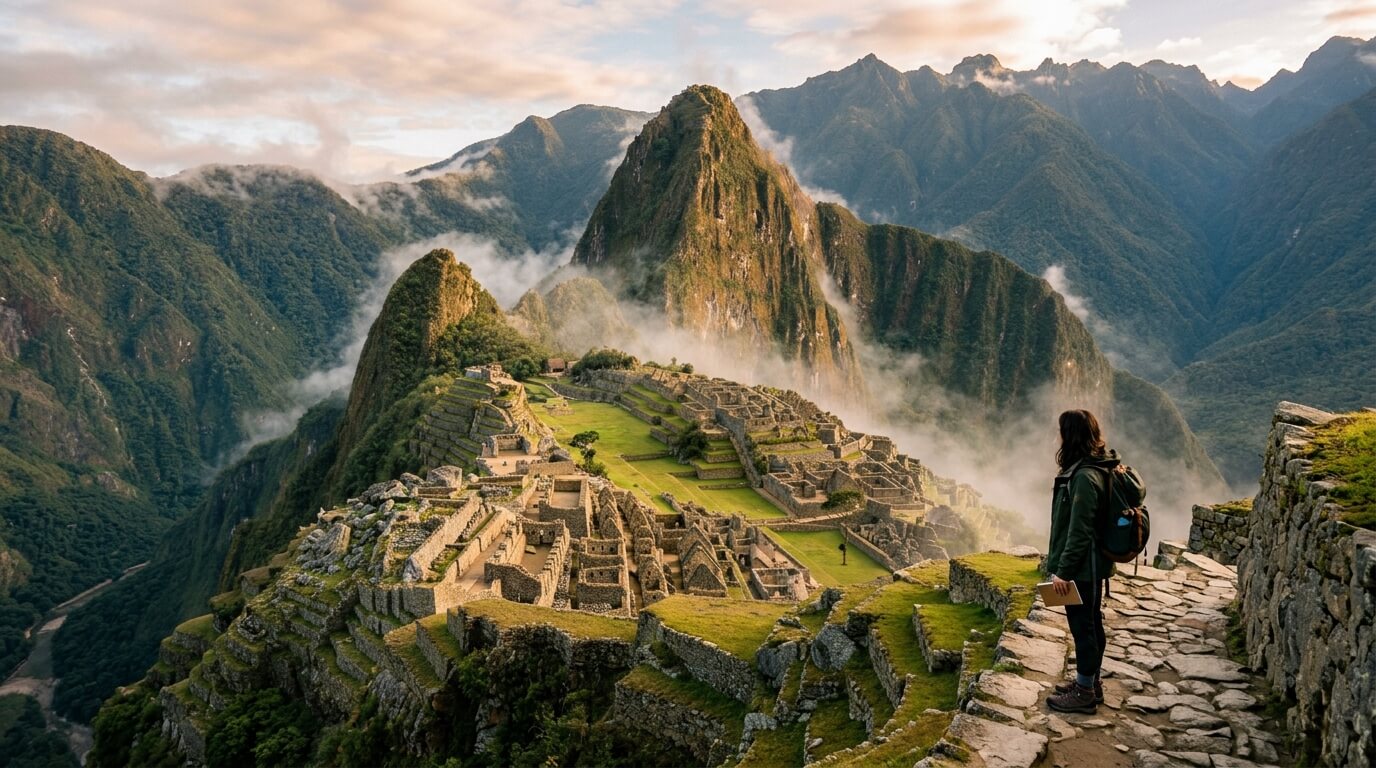
Hidden high in the Andes Mountains, the Machu Picchu remains one of the most mysterious archaeological sites in the world. Often called the “Lost City of the Incas,” it continues to raise questions about its true purpose and the people who built it. Machu Picchu was constructed during the time of the Inca Empire in the 15th century. Built under the rule of Emperor Pachacuti, it is believed to have been a royal estate, religious site, or possibly both. Its exact purpose remains a subject of debate among historians. What makes Machu Picchu so impressive is its location and engineering. The Incas built the city without wheels, iron tools, or mortar, yet the massive stone blocks fit together perfectly. The structures have survived centuries of earthquakes due to this precise construction technique. Another unanswered question is why the city was eventually abandoned. When the Spanish arrived in South America, Machu Picchu was never found, which likely saved it from destruction. It remained hidden from the outside world until its rediscovery in 1911 by explorer Hiram Bingham. Today, Machu Picchu is one of the most visited sites in South America and a symbol of Incan ingenuity. Surrounded by mist and mountains, it still feels like a place where history and mystery meet in perfect balance.
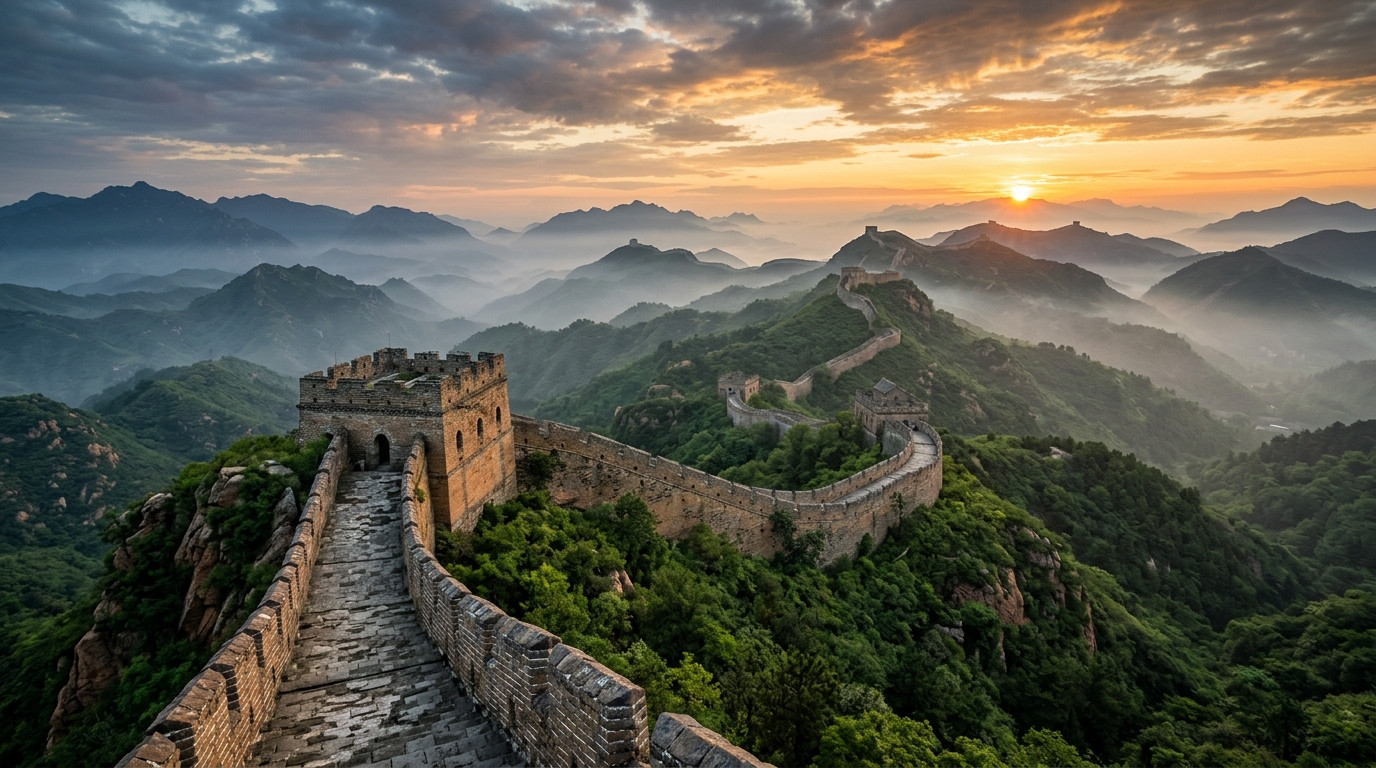
The Great Wall of China is considered one of the greatest construction achievements in human history. Extending thousands of kilometers across mountains, deserts, and valleys, it was originally built to defend ancient China against invasions and enemy forces. Construction of the wall began more than 2,000 years ago during the rule of Qin Shi Huang, the founder of the Qin Dynasty. Instead of creating one continuous wall at first, workers connected and expanded smaller defensive walls that already existed in different regions. Building the Great Wall was an enormous challenge. Millions of soldiers, workers, and prisoners were involved in the project over many centuries. Since modern machinery did not exist, materials such as stone, wood, earth, and bricks had to be carried by hand or transported with animals. Different sections of the wall were built using local materials. In mountain areas, builders used stone, while in desert regions they often used compacted earth and sand. During the Ming Dynasty, significant parts of the wall were rebuilt using stronger bricks and fortified watchtowers, forming some of the best-preserved sections seen today. The wall was not only a military defense system. It also served as a communication network, where smoke signals and fires were used to send warnings quickly across long distances. Today, the Great Wall of China stands as a symbol of determination, engineering, and ancient Chinese civilization. Its massive scale continues to amaze visitors from around the world and remains one of humanity’s greatest architectural achievements.

Standing at the entrance of New York Harbor, the Statue of Liberty has welcomed millions of people arriving in the United States for more than a century. Far more than a monument, it symbolizes freedom, hope, and new beginnings. The statue was a gift from France to the United States in 1886, created to celebrate the friendship between the two nations and the ideals of liberty and democracy. It was created by French sculptor Frédéric Auguste Bartholdi, while its internal iron framework was engineered by Gustave Eiffel, who later gained worldwide recognition for the Eiffel Tower. Made primarily of copper, the statue originally had a shiny brown color. Over time, exposure to air and weather caused the metal to develop the green patina that is now recognized around the world. This natural layer also protects the statue from further damage. The figure depicts Libertas, the Roman goddess of freedom. She holds a torch high in one hand and a tablet in the other, marked with the date July 4, 1776 — the day the United States declared independence. At her feet, broken chains symbolize freedom and liberation from oppression. For many immigrants arriving by ship in the late 19th and early 20th centuries, the Statue of Liberty was the first sight of America. It became a powerful symbol of opportunity and a hopeful future. Today, the Statue of Liberty remains one of the most famous landmarks in the world. Rising above the harbor, it continues to inspire visitors with its message of freedom and human dignity.
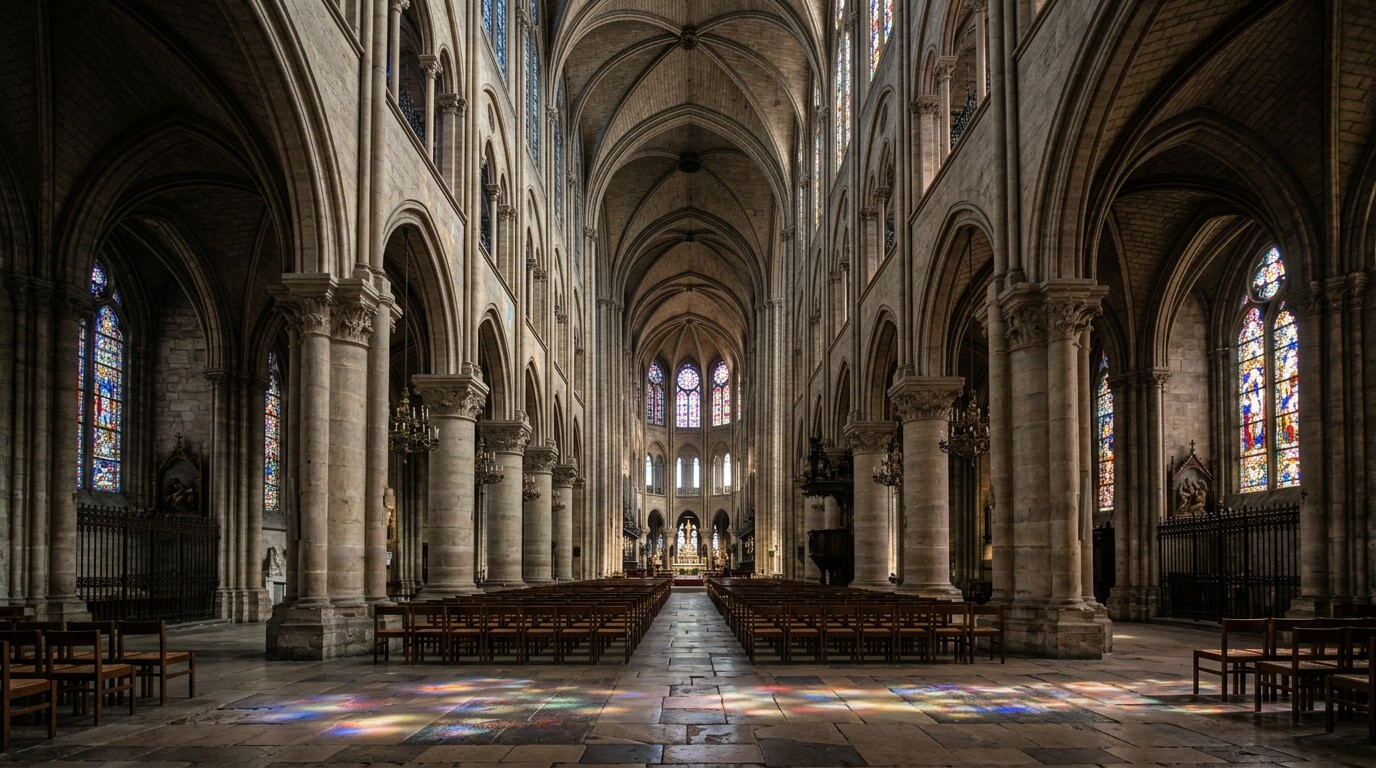
The Notre-Dame Cathedral is one of the most remarkable examples of Gothic architecture in the world. Located on the Île de la Cité in the heart of Paris, it has stood for centuries as a symbol of faith, history, and artistic achievement. Construction of the cathedral began in 1163 during the medieval period and took nearly 200 years to complete. It was built in the style of French Gothic architecture, which focused on height, light, and intricate detail—creating a sense of grandeur that was revolutionary for its time. One of the most important architectural features of Notre-Dame is its flying buttresses. These external supports allowed builders to create higher walls and larger stained-glass windows without weakening the structure. This innovation made the interior brighter and more open than earlier Romanesque churches. The cathedral is also famous for its stunning rose windows, especially the three large circular designs filled with colorful stained glass. These windows tell biblical stories through light and color, turning the interior into a visual narrative of faith. Over the centuries, Notre-Dame has undergone several restorations. One of the most important was led in the 19th century by architect Eugène Viollet-le-Duc, who helped rebuild parts of the cathedral, including the famous spire that was later destroyed in the 2019 fire. Despite damage and restoration, the cathedral remains a masterpiece of medieval engineering. Its balance of strength and beauty continues to inspire architects and visitors from around the world. Today, Notre-Dame stands not only as a religious monument, but also as a living piece of architectural history—an enduring example of human creativity reaching toward the sky.
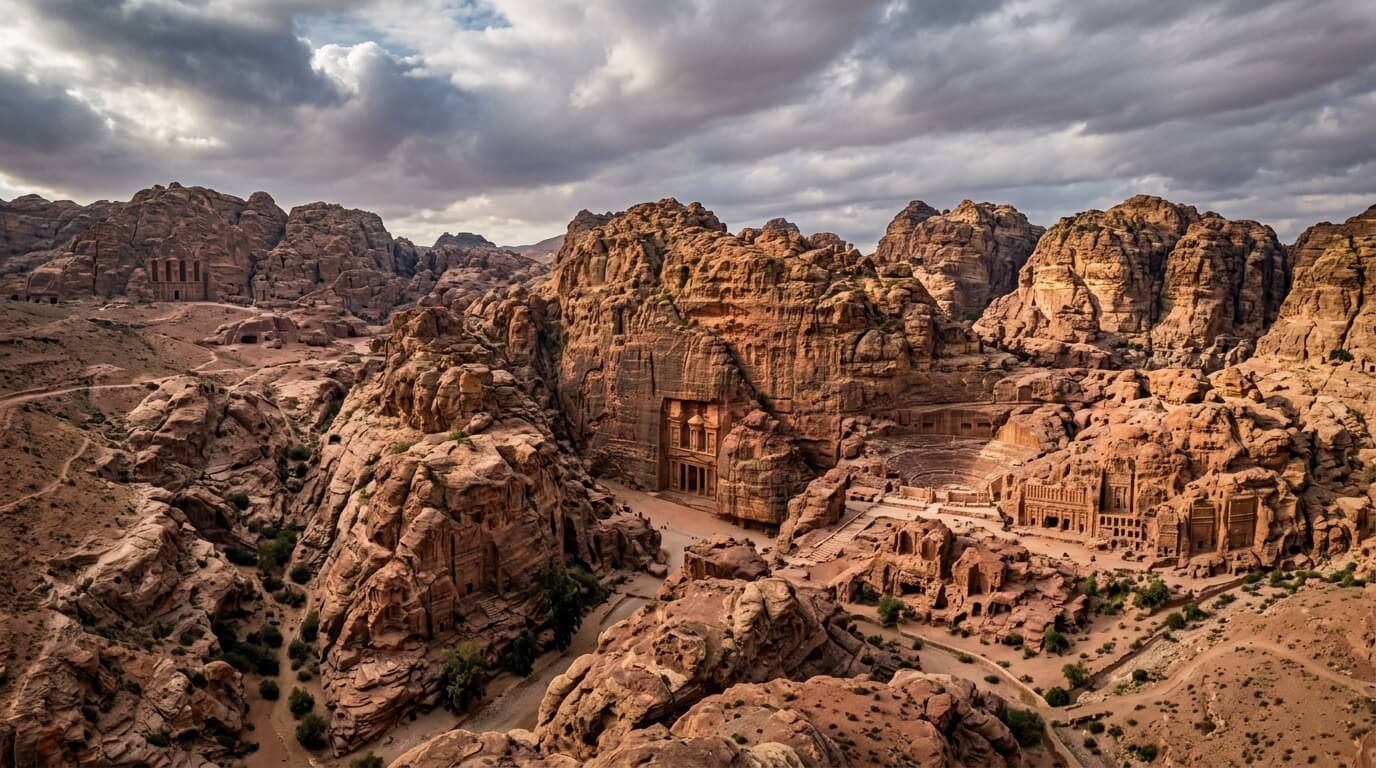
The ancient city of Petra is one of the most extraordinary archaeological sites in the world. Hidden among red sandstone cliffs, it was once a thriving city and is now a breathtaking reminder of ancient engineering and culture. Petra was built by the Nabataeans, an ancient Arab civilization that controlled important trade routes across the region. During the time of the Nabataean Kingdom, the city became a major center for commerce, connecting Arabia, Egypt, and the Mediterranean world. One of Petra’s most famous features is its architecture carved directly into the rock. Instead of building structures from separate materials, the Nabataeans sculpted temples, tombs, and facades straight into the sandstone cliffs, creating a unique blend of natural landscape and human design. The most iconic structure is Al-Khazneh, also known as “The Treasury.” Its detailed façade reflects a mix of Hellenistic, Egyptian, and local architectural influences, showing how connected Petra was to different cultures of the ancient world. Petra was also an advanced city in terms of water management. The Nabataeans built sophisticated systems of channels, dams, and cisterns to collect and store water in the desert, allowing a large population to live in an otherwise harsh environment. The city gradually declined after trade routes shifted and was eventually abandoned. For centuries, it remained hidden from the Western world until its rediscovery in 1812 by explorer Johann Ludwig Burckhardt. Today, Petra is one of the New Seven Wonders of the World and a UNESCO World Heritage Site. Its dramatic cliffs, carved monuments, and mysterious history continue to attract visitors who are drawn to its timeless beauty and sense of wonder.
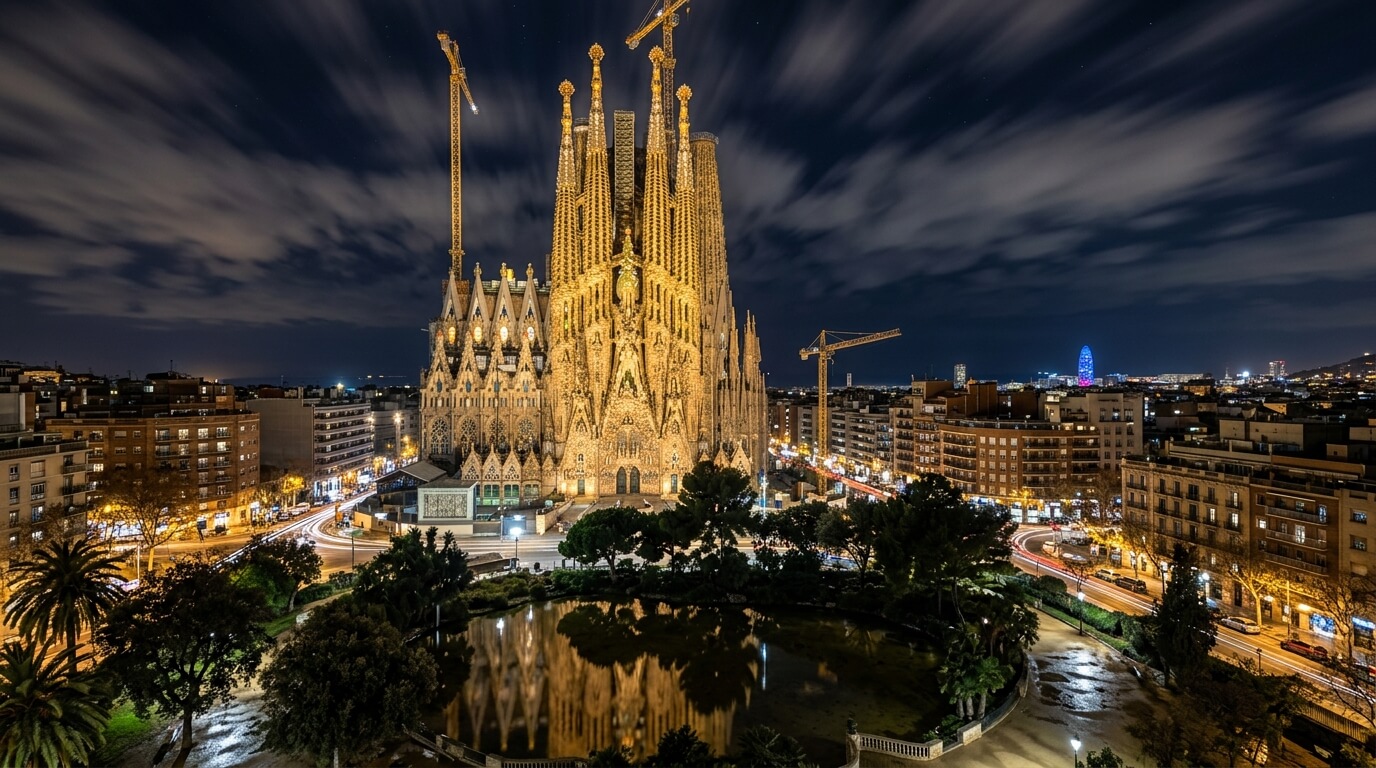
The Sagrada Familia is one of the most unique and recognizable churches in the world. Located in Barcelona, it is still under construction after more than a century, yet it already stands as a powerful symbol of faith, nature, and artistic imagination. The design was led by the famous architect Antoni Gaudí, who transformed traditional church architecture into something deeply symbolic and organic. Gaudí believed that nature was the ultimate source of inspiration, and this idea is visible in every part of the basilica. Each element of the Sagrada Família carries meaning. The towers, for instance, represent Christian figures such as Jesus Christ, the Virgin Mary, the four Evangelists, and the twelve Apostles. The tallest central tower, dedicated to Jesus, is intended to rise above all others, symbolizing spiritual elevation. Inside, the structure feels like a forest. Columns branch out like trees, and natural light filters through stained glass in shifting colors. This design is meant to create a sense of harmony between nature and the divine, turning the interior into a spiritual experience rather than just an architectural space. The façades also tell different parts of the Christian story. The Nativity Façade celebrates the birth of Christ with detailed, joyful sculptures, while the Passion Façade presents a more dramatic and somber interpretation of suffering and sacrifice. Even today, construction continues, guided by Gaudí’s original vision but supported by modern technology. The Sagrada Família is expected to be completed in the coming years, making it one of the longest-running architectural projects in history. More than just a church, it is a living symbol of devotion, creativity, and the idea that architecture can express deep spiritual meaning through form, light, and structure.
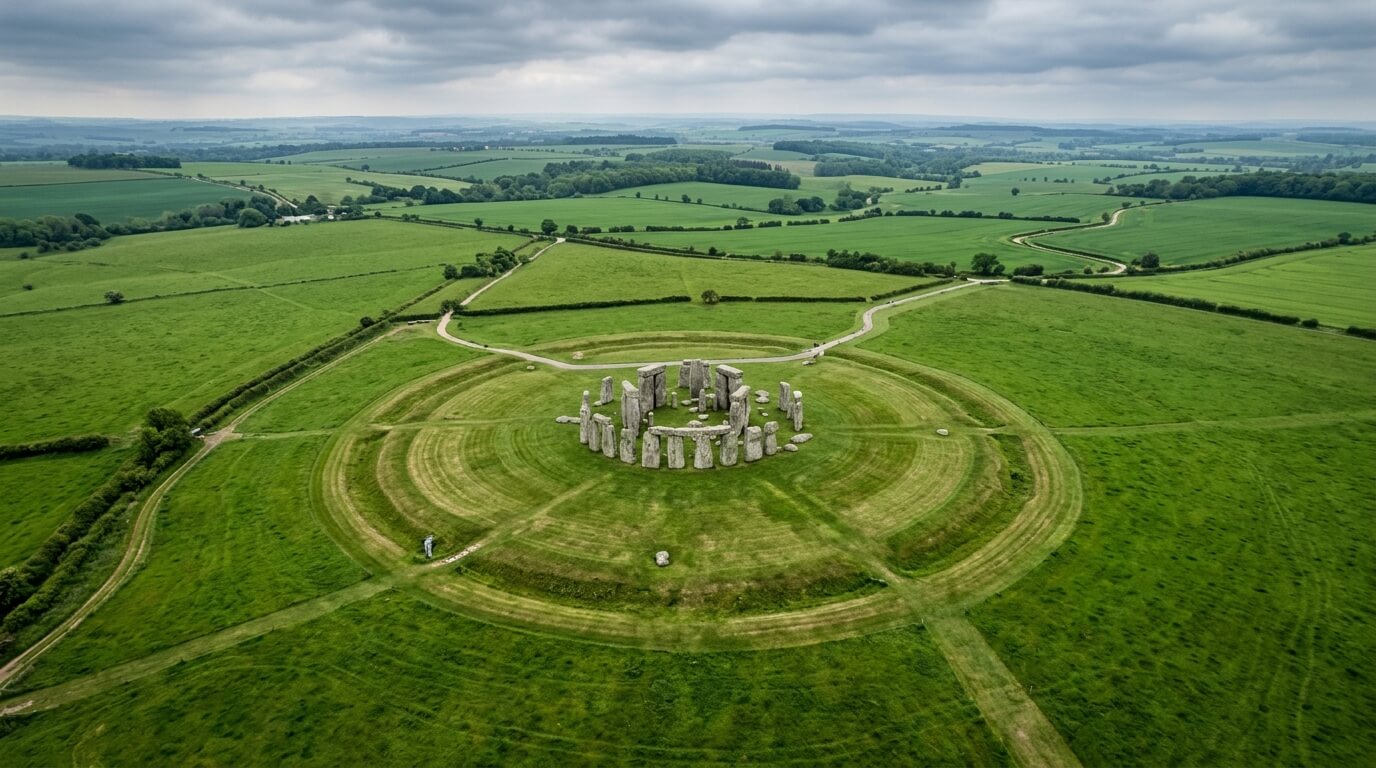
The Stonehenge is one of the most mysterious prehistoric monuments in the world. Located on the Salisbury Plain in southern England, it has fascinated historians, archaeologists, and visitors for centuries. Built during the late Neolithic and early Bronze Age periods, Stonehenge was constructed in several stages over thousands of years. Massive stones, some weighing up to 25 tons, were transported from distant locations and arranged in a circular formation that still stands today. What makes Stonehenge so intriguing is that its exact purpose is still unknown. Some researchers believe it was a religious site, possibly connected to ancient rituals or ceremonies. Others suggest it may have been an astronomical calendar used to track the movements of the sun and seasons. The site shows remarkable alignment with the summer and winter solstices. During these times, the sun rises and sets in positions that perfectly match the arrangement of the stones, suggesting that the builders had advanced knowledge of astronomy for their time. Even more puzzling is how the stones were moved and positioned with such precision using only primitive tools. Despite many theories, no single explanation fully solves the engineering and logistical challenges involved in its construction. Today, Stonehenge is part of the UNESCO World Heritage list and continues to attract visitors from around the world. Its silent stone circle stands as a powerful reminder of a lost prehistoric culture and a mystery that still invites curiosity and wonder.